
 easytaxbite

The IRS opened the 2026 tax filing season with a bang. The One Big Beautiful Bill Act (OBBBA)—signed into law in 2025—has transformed the tax landscape with permanent deductions, new breaks for workers, and massive business incentives. Whether you’re a senior, a tipped worker, a business owner, or planning your estate, these changes directly impact your wallet.
Let’s break down the seven major changes you need to know now.
1. Seniors Get a $6,000 “Age Bonus” Deduction

The Break: If you’re 65 or older, you can now claim an additional $6,000 deduction on top of your standard deduction. Married couples filing jointly where both spouses qualify get $12,000.
Why It Matters: This is permanent—not a temporary fix. For retirees on fixed incomes, this reduces taxable income significantly. A single senior with $50,000 in income could see their taxable income drop to $22,100 (after the $16,100 standard deduction + $6,000 senior deduction).
Action Item: If you turned 65 in 2025, make sure your tax preparer checks the “Age 65 or older” box on your return.
2. Tipped Workers: No Tax on Up to $25,000 in Tips

The Break: Restaurant staff, bartenders, hairdressers, and other tipped employees can now deduct up to $25,000 in qualified tips from their taxable income.
The Catch: Tips must be reported to your employer to qualify. Cash tips left on tables still need proper documentation.
Real Impact: A server earning $40,000 in wages plus $20,000 in tips would only pay income tax on $40,000 (minus other deductions). This could save thousands in federal tax alone.
Action Item: Keep meticulous records of all tips received and ensure your employer’s payroll system is tracking them correctly.
3. Overtime Pay: Tax-Free Up to $12,500

The Break: Working extra hours finally pays off—literally. Workers can deduct up to $12,500 in qualified overtime pay ($25,000 for joint filers if both work overtime).
Who Qualifies: Hourly employees working more than 40 hours per week. The deduction applies to overtime premiums (typically 1.5x regular pay).
Strategic Move: If you’ve been avoiding overtime because of tax concerns, 2026 is the year to reconsider. You could earn thousands extra while keeping your tax bracket stable.
4. Car Loan Interest: $10,000 Deduction for Vehicle Owners
The Break: Interest on loans for qualified passenger vehicles is now deductible up to $10,000 annually.
Details: Applies to new and used vehicles purchased for personal use. Commercial vehicles have separate rules under business provisions.
Who Benefits: Anyone financing a vehicle purchase in 2026. On a $40,000 car loan at 6% interest, you could deduct roughly $2,400 in year one—reducing your tax bill by $500+ depending on your bracket.
5. Business Owners: 100% Bonus Depreciation is BACK (Permanently)
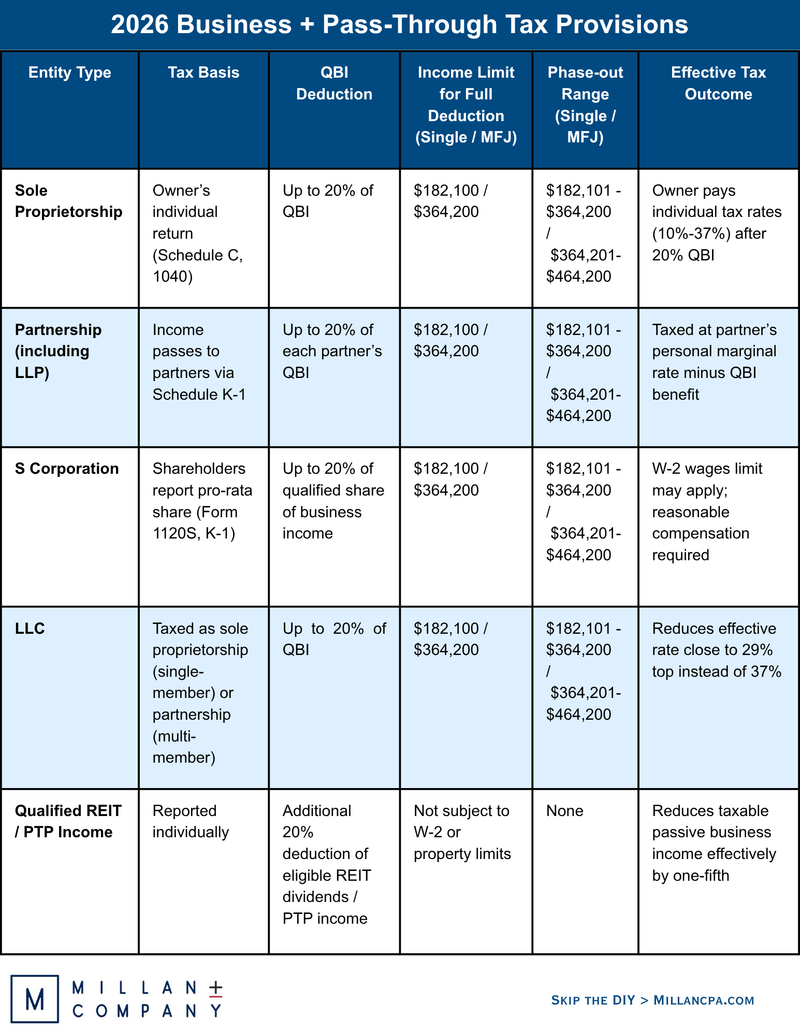
The Break: The 100% bonus depreciation—phased down to 40% in 2025—is restored to 100% for qualified property and made permanent.
What This Means: Buy equipment, machinery, or vehicles for your business, and deduct the entire cost in year one. No more spreading depreciation over 5-7 years.
Example: Purchase a $100,000 piece of manufacturing equipment? Deduct $100,000 immediately, potentially saving $37,000 in taxes (at the top 37% rate).
Plus:
- Section 179 expensing expanded to $2.5 million
- R&D expensing fully restored (no more amortization requirements)
- Business interest deduction now uses EBITDA (more favorable than EBIT)
Action Item: If you’ve been delaying capital investments, 2026 is the year to buy. The permanent status means no more “sunset anxiety” about deductions disappearing.
6. Estate Planning Window: $15 Million Exemption
The Break: The federal estate and gift tax exemption remains at $15 million per person ($30 million for married couples) with inflation adjustments.
Why It’s Urgent: This high exemption is locked in permanently under OBBBA. Previously, exemptions were set to drop to $5 million (adjusted for inflation) after 2025.
Strategy: High-net-worth families can transfer up to $30 million to heirs tax-free. Combined with life insurance trusts and family limited partnerships, this creates unprecedented wealth preservation opportunities.
7. International Business: U.S. Companies Win Big
The Break: The U.S. secured an exemption from the OECD’s global 15% minimum tax through a “side-by-side” agreement.
Key Changes:
- GILTI (Global Intangible Low-Taxed Income) becomes NCTI (Net CFC Tested Income) with a 40% deduction
- FDII (Foreign-Derived Intangible Income) becomes FDDEI with a 33.34% deduction (effective rate ~14%)
Impact: U.S. multinationals face lower effective tax rates on foreign income than foreign competitors, encouraging domestic headquarters and R&D investment.
2026 Tax Brackets at a Glance
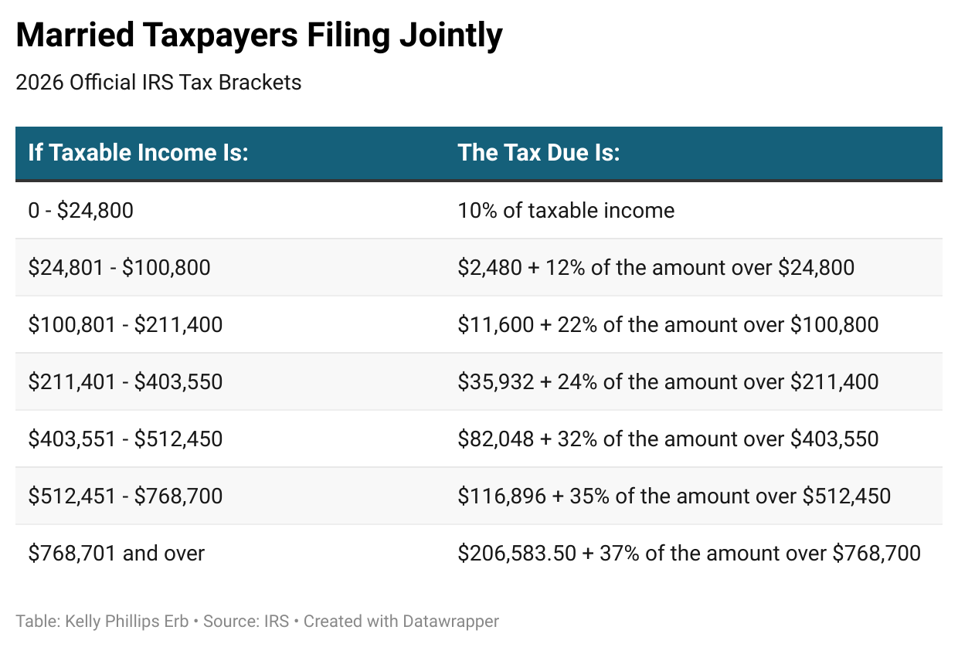
| Filing Status | Standard Deduction | Top Rate (37%) Kicks In |
|---|---|---|
| Single | $16,100 | $640,600 |
| Married Filing Jointly | $32,200 | $768,600 |
| Head of Household | $24,300 | $640,600 |
Source: IRS Rev. Proc. 2025-31
⚠️ New Compliance Alert: Remittance Tax
Starting January 1, 2026, a 1% excise tax applies to remittance transfers sent abroad. If you send money internationally through services like Western Union or MoneyGram, the provider will deduct 1% and remit it to the IRS. First deposit due January 29, 2026.
Your 2026 Action Plan
- Seniors: Verify your age deduction is applied
- Tipped Workers: Report all tips to maximize the $25K deduction
- Business Owners: Accelerate equipment purchases before year-end
- High Earners: Review estate planning strategies with the $15M exemption
- Everyone: Switch to direct deposit—paper refund checks are being phased out
