
 easytaxbite
I’ll search for information about VAT (Value Added Tax) in the UAE and find a relevant image for you.
Based on my search, here’s a clear explanation of the standard (normal) VAT rate in the UAE:
UAE VAT Standard Rate: 5%
The standard VAT rate in the United Arab Emirates is 5%, which applies to most goods and services supplied within the country. This rate was introduced on January 1, 2018 when VAT was first implemented in the UAE.
How It Works:
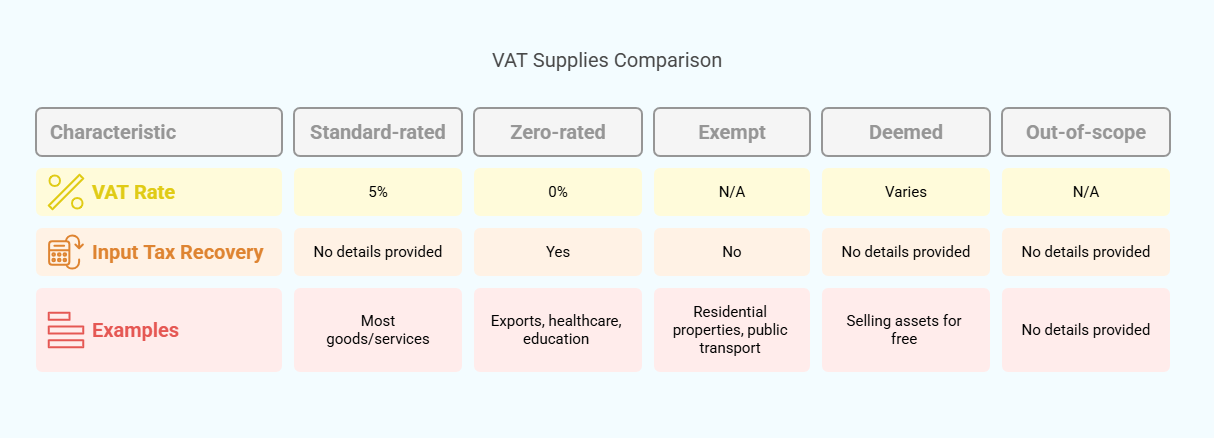
- Standard Rate (5%): Applies to most taxable goods and services including retail sales, professional services, commercial property rentals, food & beverages, utilities, and electronics
- Zero-Rated (0%): Applies to exports, international transport, crude oil/natural gas, first supply of residential real estate, and certain healthcare/educational services
- Exempt: No VAT charged, but input tax cannot be recovered (includes certain financial services, residential rent after first supply, bare land, and local passenger transport)
Example Calculation:
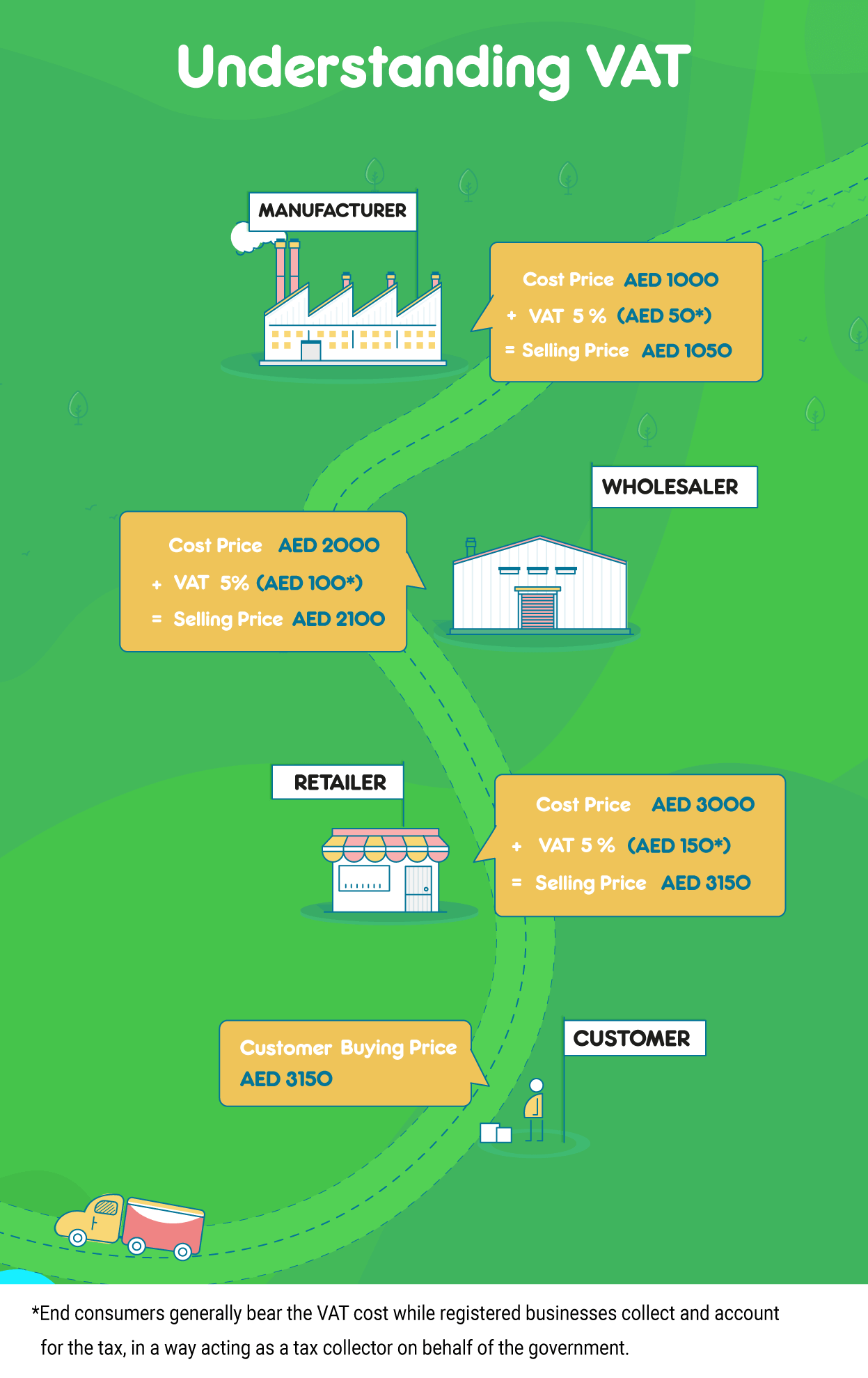
If you sell a product worth AED 1,000, you add 5% VAT:
- VAT Amount: AED 1,000 × 5% = AED 50
- Total Price: AED 1,050
Visual Reference:
Here’s an infographic showing how VAT flows through the supply chain in the UAE:
And here’s a comparison table of the different VAT categories:
Key Points:
- Registration Threshold: Mandatory registration at AED 375,000 annual turnover; voluntary registration at AED 187,500
- Filing Frequency: Quarterly for most businesses; monthly for businesses with turnover exceeding AED 150 million
- Input Tax Recovery: Businesses can reclaim VAT paid on business purchases (input tax) against VAT collected from customers (output tax)
The 5% standard rate is considered relatively low compared to global standards (most European countries charge 15-25%), making the UAE an attractive business destination while still generating revenue for public services.
