
 easytaxbite
Transfer Pricing Explained
Transfer Pricing refers to the pricing of goods, services, or intellectual property transferred between related entities within the same multinational enterprise (MNE). When a parent company sells products to its subsidiary, or when two subsidiaries trade with each other, the price they agree upon is called the “transfer price.”
Why It Matters
- Tax Optimization – Companies may set transfer prices to shift profits to low-tax jurisdictions
- Regulatory Compliance – Tax authorities require that transactions follow the “Arm’s Length Principle” (as if the parties were unrelated)
- Performance Measurement – Used internally to evaluate divisional profitability
The “Normal” Size Context
There isn’t a single “normal” transfer pricing amount—prices vary dramatically based on:
- Industry (pharmaceuticals, tech, manufacturing)
- Transaction type (tangible goods, services, royalties)
- Geographic locations involved
However, comparable uncontrolled prices (what unrelated parties would charge) serve as the benchmark. Tax authorities like the IRS and OECD closely scrutinize transactions to ensure they aren’t artificially inflated or deflated to evade taxes.
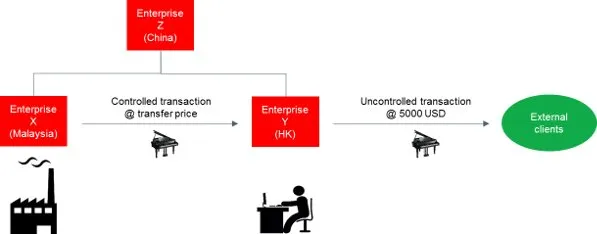
This diagram illustrates how transfer pricing works between related entities (controlled transactions) versus independent companies (uncontrolled transactions).
Key Methods Used
| Method | Description |
|---|---|
| CUP | Comparable Uncontrolled Price |
| Resale Price | Price minus appropriate gross margin |
| Cost Plus | Costs plus reasonable markup |
| TNMM | Transactional Net Margin Method |
| Profit Split | Divide profits between entities |
Compliance Note: Most countries require extensive documentation to prove transfer prices are at arm’s length, with penalties for non-compliance reaching billions in some cases (e.g., Apple’s €13B case with the EU).