
 easytaxbite

UAE Corporate Tax Overview
The UAE Corporate Tax (CT) regime represents one of the most significant fiscal reforms in the country’s history, transitioning from a zero-tax environment to a structured taxation system while maintaining competitive rates globally.
What is UAE Corporate Tax?
Federal Corporate Tax is a direct tax levied on the net profit of businesses and other entities. It was introduced through Federal Decree-Law No. 47 of 2022 on the Taxation of Corporations and Businesses, effective for financial years starting on or after June 1, 2023.
Governing Authority: Federal Tax Authority (FTA)
Legal Framework: Ministry of Finance regulations
Digital Platform: EmaraTax portal
Federal Tax Authority (FTA) Logo:
Core Objectives
| Objective | Purpose |
|---|---|
| Economic Diversification | Reduce reliance on oil revenues |
| International Compliance | Meet OECD standards and EU requirements |
| Prevent Harmful Tax Practices | Align with global tax transparency |
| Maintain Competitiveness | Keep UAE attractive for investment |
| Support Small Business | Threshold protects startups and SMEs |
Tax Rates Structure
UAE Corporate Tax Decision Tree: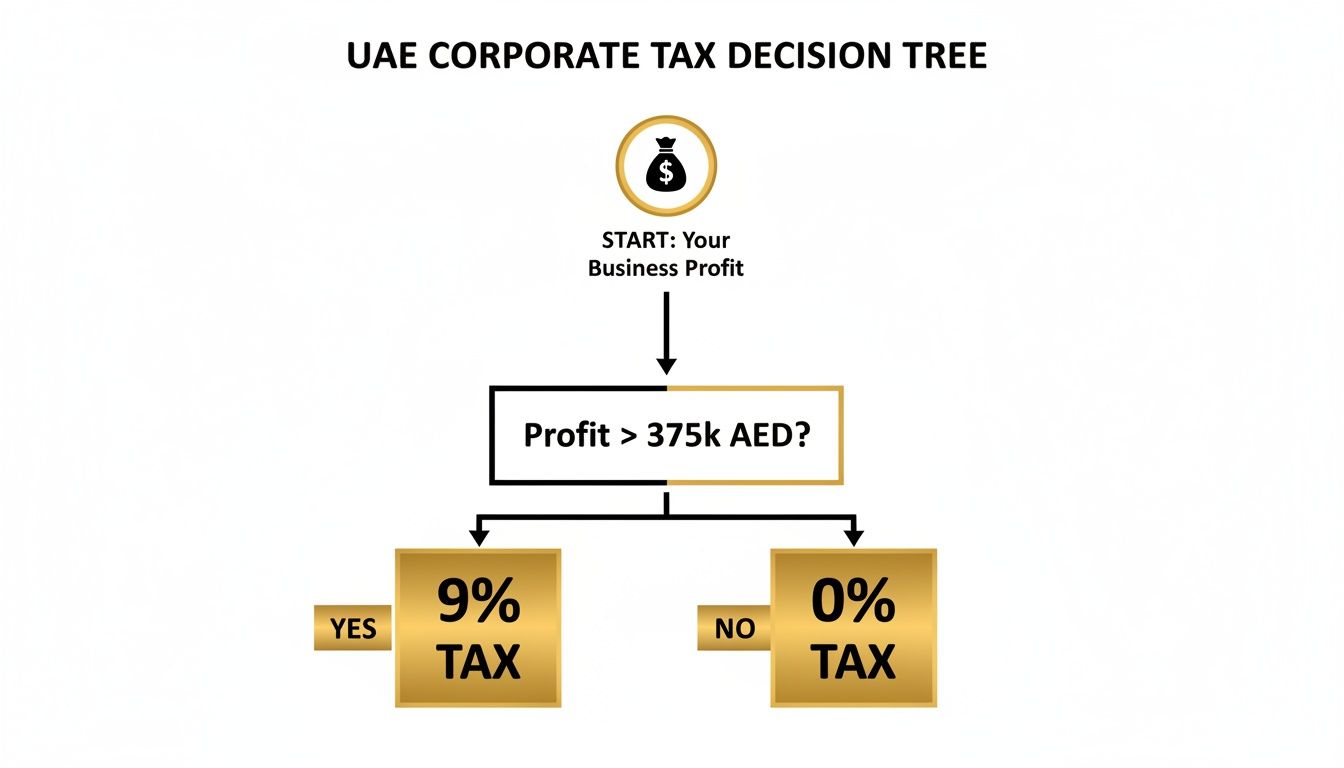
Official UAE Corporate Tax Infographic: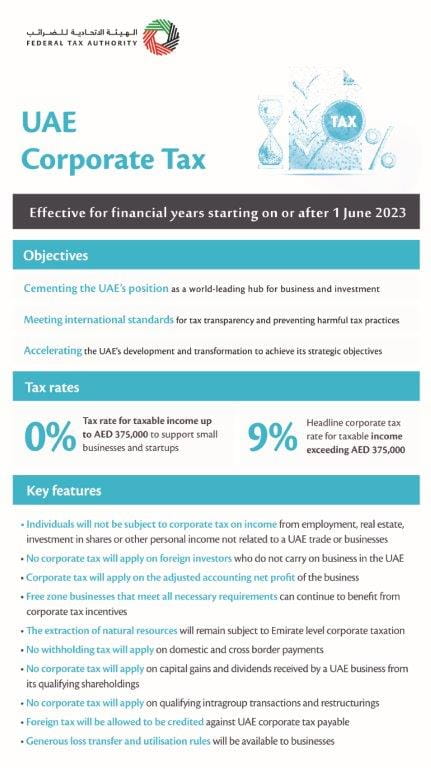
| Taxable Income | Rate |
|---|---|
| First AED 375,000 | 0% |
| Above AED 375,000 | 9% |
| Large Multinationals* | 15% |
*Applicable to multinational groups with consolidated global revenues exceeding EUR 750 million
Who is Subject to CT?
Resident Persons:
- UAE-incorporated companies (Mainland & Free Zones)
- Foreign companies effectively managed in UAE
- Natural persons conducting business activities
Non-Resident Persons:
- Foreign companies with Permanent Establishment (PE) in UAE
- Non-residents earning UAE-sourced income
- Non-residents with nexus in UAE
Free Zone vs Mainland Comparison
Corporate Tax Rates for Mainland & Free Zones: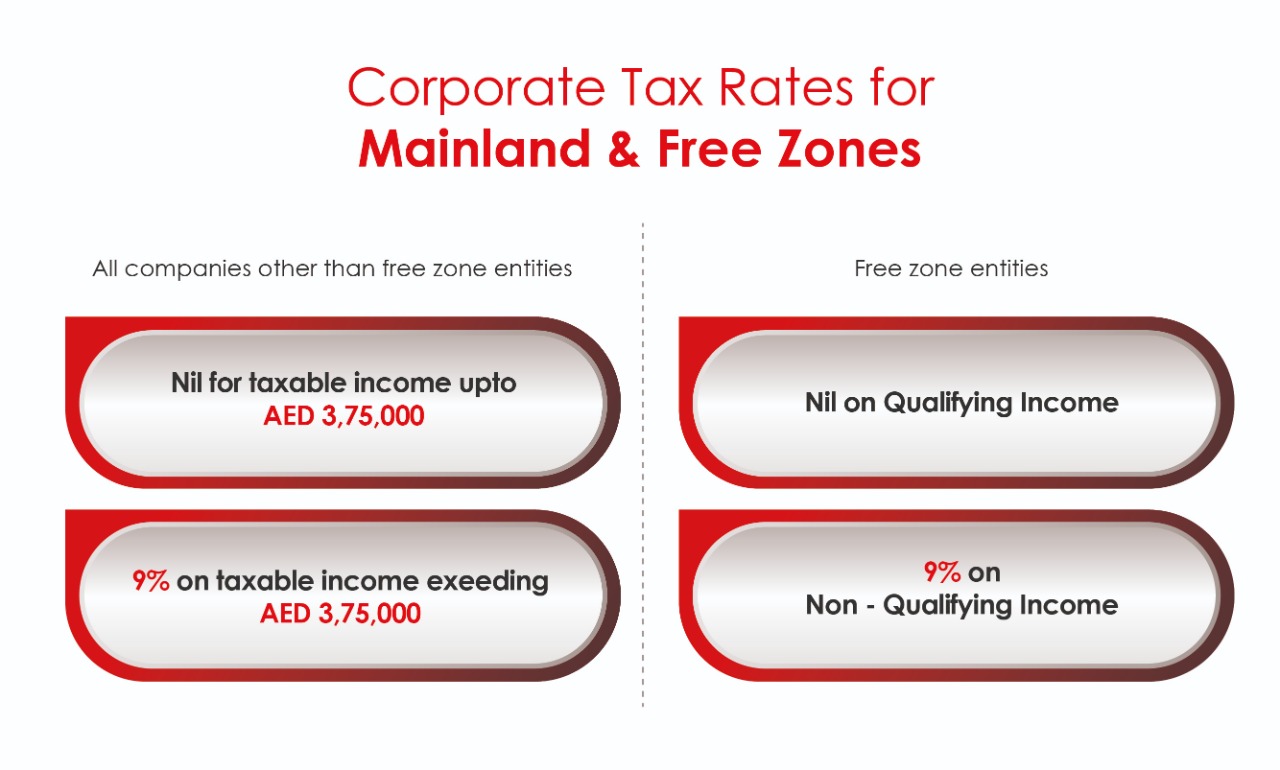
Mainland vs Free Zone Company Differences: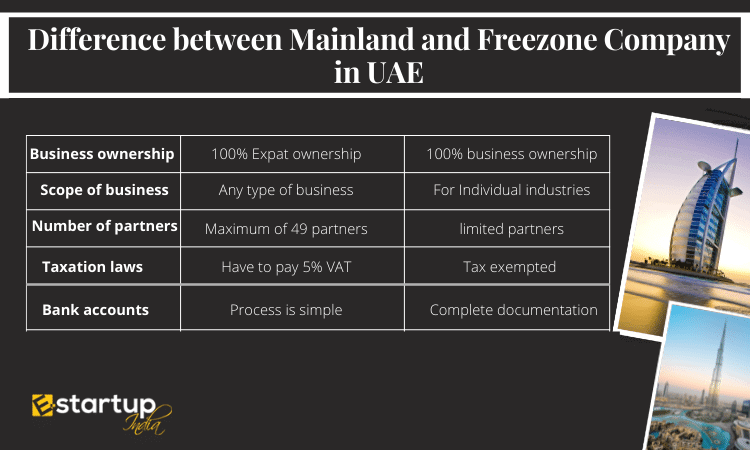
Free Zone vs Mainland Visual:
| Feature | Mainland | Free Zone |
|---|---|---|
| Corporate Tax | 0% up to AED 375K, then 9% | 0% on qualifying income, 9% on non-qualifying |
| Ownership | 100% foreign ownership allowed | 100% foreign ownership |
| Office Requirement | Physical office mandatory | Flexible office solutions |
| Business Scope | UAE and international market | Primarily international (some allow UAE market) |
| Customs Duty | Standard rates | Exemptions available |
Free Zone Regime
Qualifying Free Zone Persons (QFZP) can benefit from 0% Corporate Tax on:
Qualifying Income:
- Income from transactions with Free Zone persons
- Foreign-sourced income (passive and active)
- Income from certain qualifying activities
Standard 9% Rate applies to:
- Taxable income from mainland UAE activities
- Excluded activities (banking, insurance, finance, leasing, real property, intellectual property)
Conditions to Maintain QFZP Status:
- Adequate substance in the Free Zone
- Qualifying activities as primary business
- Arm’s length principle compliance
- Transfer pricing documentation
- Timely filing of QFZP declaration
Taxable Income Calculation
How to Calculate Taxable Income: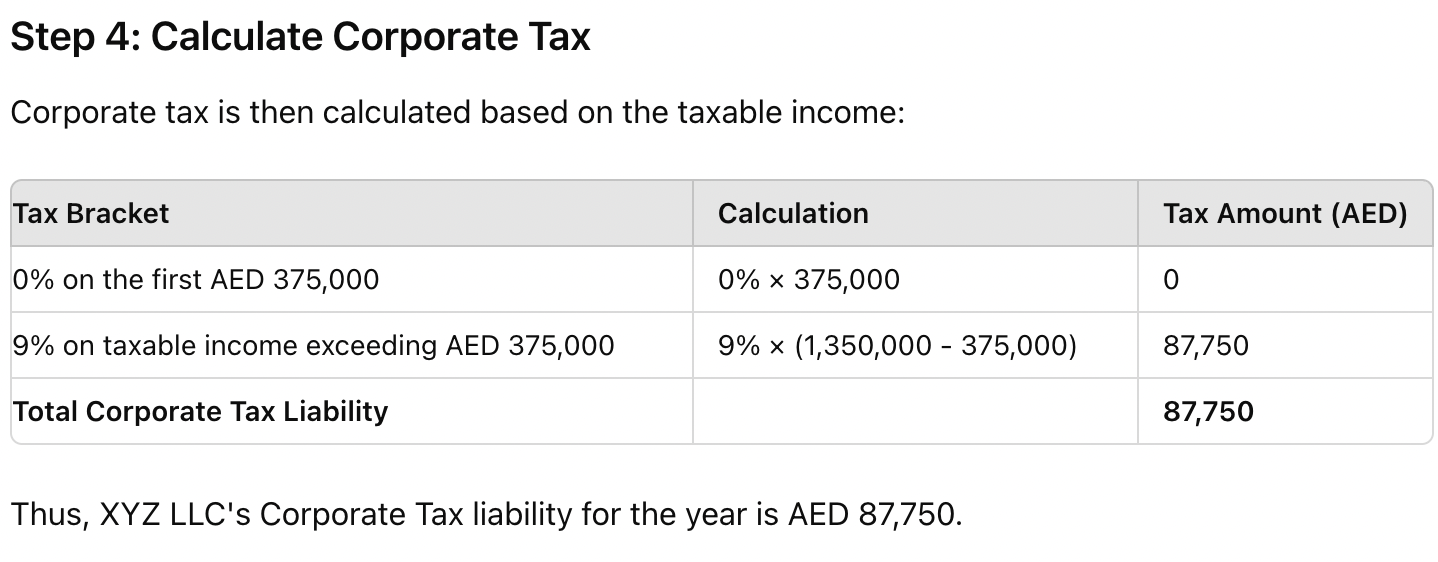
Corporate Tax Calculation Example: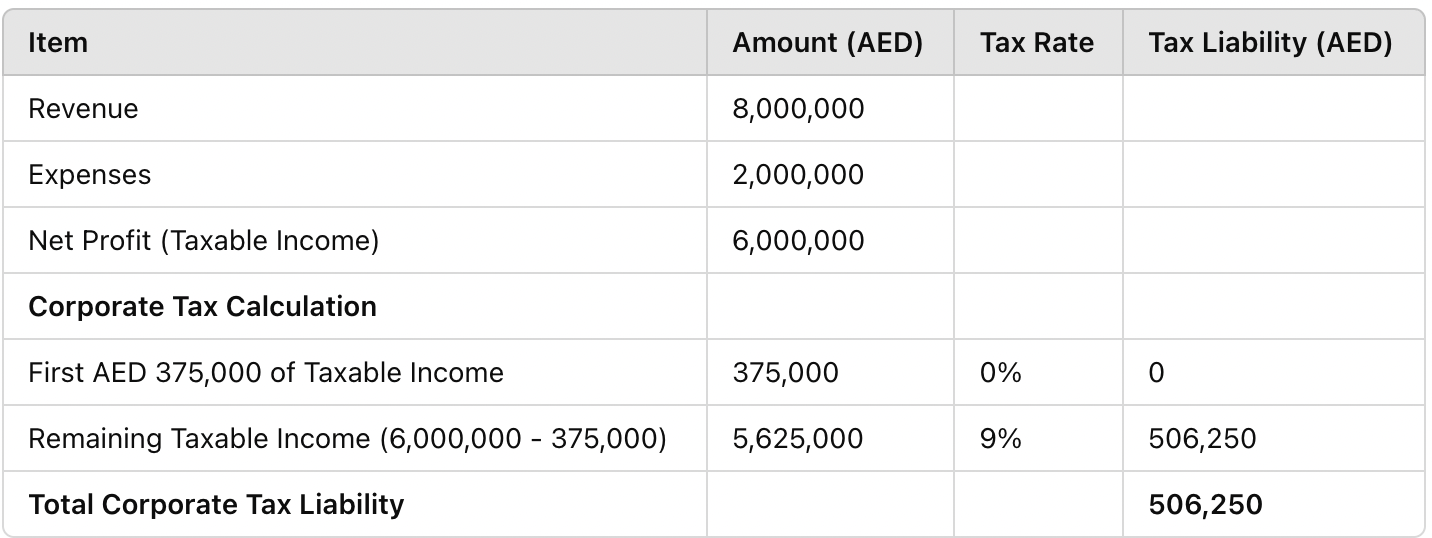
Starting Point: Accounting Net Profit (IFRS or other acceptable standards)
Adjustments Required:
| Add Back (Non-Deductible) | Deductions Allowed |
|---|---|
| Corporate tax payable | Business expenses wholly for business |
| Fines and penalties | Depreciation (as per tax rules) |
| Donations to unapproved entities | Interest expense (capped at 30% of EBITDA) |
| Dividends paid | Charitable donations (up to limits) |
| Entertainment expenses (partial) | Tax losses carried forward |
| Related party payments (non-arm’s length) |
EmaraTax Registration Portal
EmaraTax Login Portal: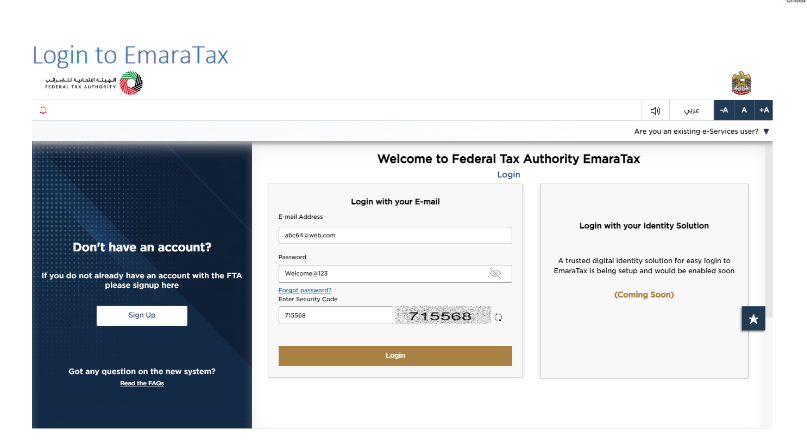
The EmaraTax platform is the official digital portal for all tax-related matters in the UAE, including:
- Corporate Tax registration
- Tax return filing
- Payment processing
- Document submission
- Communication with FTA
Key Compliance Deadlines
| Action | Timeline |
|---|---|
| Registration | Within specified period based on license date |
| Tax Return Filing | Within 9 months from financial year-end |
| Tax Payment | Same as return filing deadline |
| Transfer Pricing Documentation | Within 30 days of FTA request |
| Record Keeping | Minimum 7 years |
Transfer Pricing Rules
UAE applies Arm’s Length Principle for related-party transactions:
Documentation Requirements:
- Master File (for groups with revenue > AED 200M)
- Local File (for entities with revenue > AED 200M)
- Country-by-Country Report (for groups with revenue > AED 3.15B)
Methods Accepted:
- Comparable Uncontrolled Price (CUP)
- Resale Price Method (RPM)
- Cost Plus Method (CP)
- Transactional Net Margin Method (TNMM)
- Transactional Profit Split Method
- Other OECD-recognized methods
Administrative Framework
EmaraTax Platform Features:
- Online registration and deregistration
- Tax return filing and payment
- Refund applications
- Objections and appeals
- Document submission
- Communication with FTA
Tax Agent Requirements:
- Mandatory for some complex cases
- Must be registered with FTA
- Authorized to represent taxpayers
Penalties & Enforcement
| Violation | Penalty (AED) |
|---|---|
| Failure to maintain records | 10,000 per violation |
| Failure to submit data/information | 5,000 – 50,000 |
| Late registration | 10,000 |
| Late deregistration | 1,000/month (max 10,000) |
| Late filing of return | 500/month (max 10,000) |
| Late payment | 2% immediate + 4% monthly |
| Incorrect tax return | 50% of tax difference |
| Tax evasion | Up to 300% of tax evaded |
Strategic Considerations
For Businesses:
- Review corporate structure for tax efficiency
- Assess Free Zone vs. Mainland operations
- Implement robust transfer pricing policies
- Upgrade accounting systems for CT compliance
- Train finance teams on new requirements
For Investors:
- UAE remains highly competitive (0-9% rates vs. global average ~24%)
- Extensive treaty network (140+ Double Tax Treaties)
- No withholding tax on dividends, interest, royalties
- No personal income tax
- No capital gains tax (in most cases)
Comparison with Regional Tax Rates
| Jurisdiction | Corporate Tax Rate |
|---|---|
| UAE | 0% – 9% |
| Saudi Arabia | 20% |
| Qatar | 10% |
| Kuwait | 15% |
| Bahrain | 0% (introducing 9% in 2024) |
| Oman | 15% |
Note: The UAE Corporate Tax regime is continuously evolving with Cabinet Decisions and FTA guidelines. Businesses should monitor official updates from the Ministry of Finance and Federal Tax Authority to ensure ongoing compliance.
