
 easytaxbite

UAE Corporate Tax Registration Explained
The United Arab Emirates introduced Federal Corporate Tax (CT) on June 1, 2023, marking a significant shift from its historically tax-free business environment. The Federal Tax Authority (FTA) oversees all tax registrations through the EmaraTax digital platform.
Key UAE Tax Registration Types
| Type | Purpose | Applicability |
|---|---|---|
| Corporate Tax (CT) | 9% tax on taxable profits exceeding AED 375,000 | All businesses (with exceptions) |
| VAT (Value Added Tax) | 5% consumption tax | Businesses with supplies exceeding AED 375,000 |
| Excise Tax | Tax on harmful goods (tobacco, sugary drinks, energy drinks) | Importers, producers, stockpilers |
| Tax Residency Certificate | Proof of UAE tax residency for treaty benefits | Eligible residents and companies |
Corporate Tax Registration Requirements
Who Must Register:
- All UAE-incorporated companies (including Free Zone entities)
- Foreign companies with a Permanent Establishment (PE) in UAE
- Non-resident companies earning UAE-sourced income
- Natural persons conducting business activities
Exemptions:
- Businesses earning below AED 375,000 (0% rate applies)
- Extractive industries (oil & gas)
- Qualifying Free Zone Persons (0% on qualifying income)
- Government entities and qualifying public benefit organizations
The Registration Process (EmaraTax Platform)
Step 1: Create EmaraTax Account
- Access the FTA portal at tax.gov.ae
- Register using UAE Pass or digital identity verification
Step 2: Submit Corporate Tax Registration
- Legal name and trade name (English & Arabic)
- Commercial license details
- Business activity codes
- Financial year-end date
- Owner/shareholder details (25%+ ownership)
- Authorized signatory information
Step 3: Upload Supporting Documents
- Trade license copy
- Memorandum of Association (MOA)
- Passport/Emirates ID of owners
- Power of Attorney (if applicable)
- Financial statements (if existing business)
Step 4: Receive Tax Registration Number (TRN)
- FTA reviews application (typically 5-10 business days)
- CT Registration Certificate issued upon approval
Important Deadlines
| Business Type | Registration Deadline |
|---|---|
| Companies incorporated before March 1, 2024 | Based on financial year (varies) |
| New companies from March 2024 | Within 3 months of incorporation |
| License renewal/change | Must maintain active CT registration |
Corporate Tax Rates
- 0% on taxable income up to AED 375,000
- 9% on taxable income exceeding AED 375,000
- 15% for large multinationals (OECD Pillar Two rules, from 2025)
Visual Examples
UAE Corporate Tax Registration Certificate:
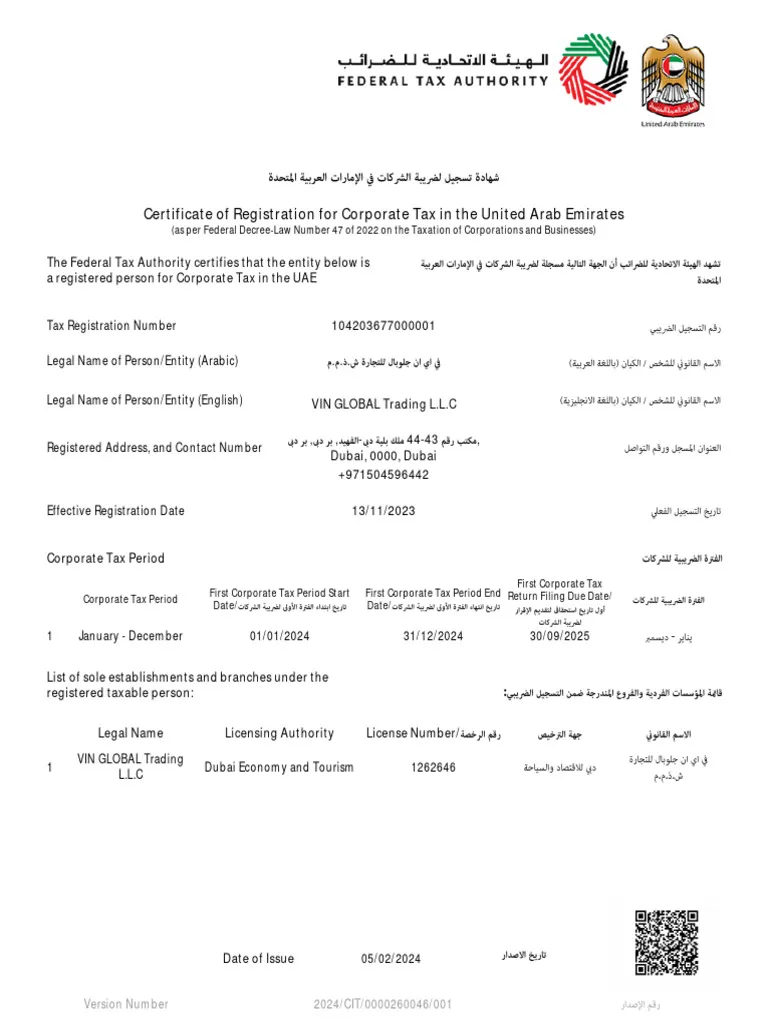
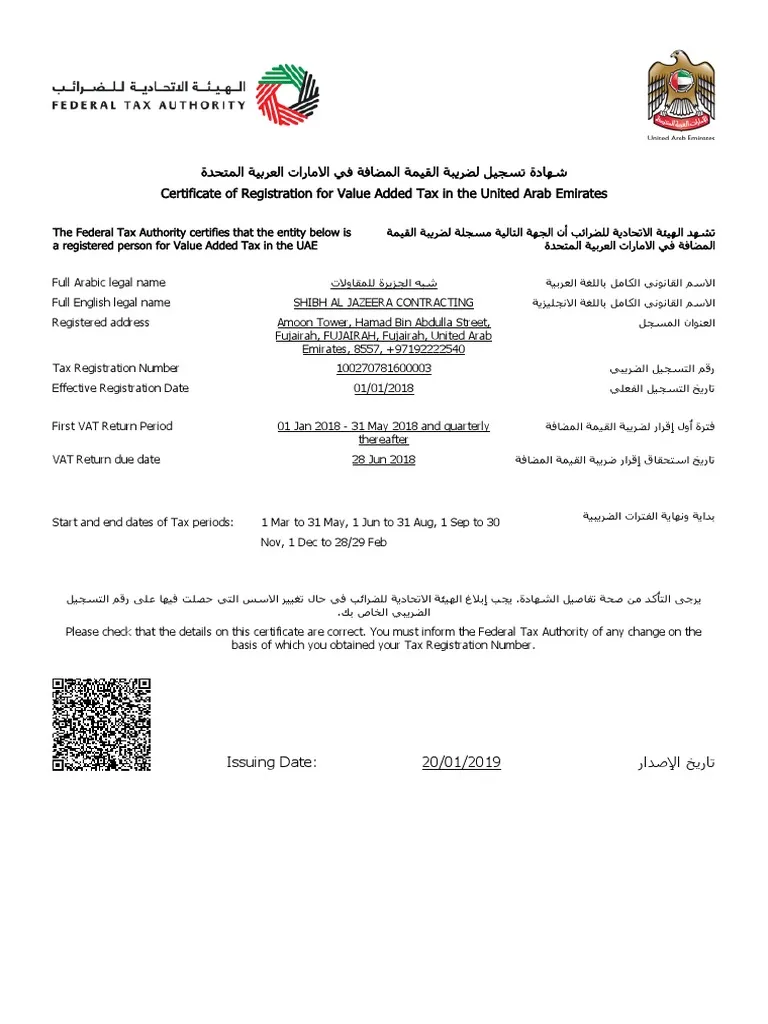
UAE VAT/TRN Certificate (similar format):
Corporate Tax Registration Process Flow: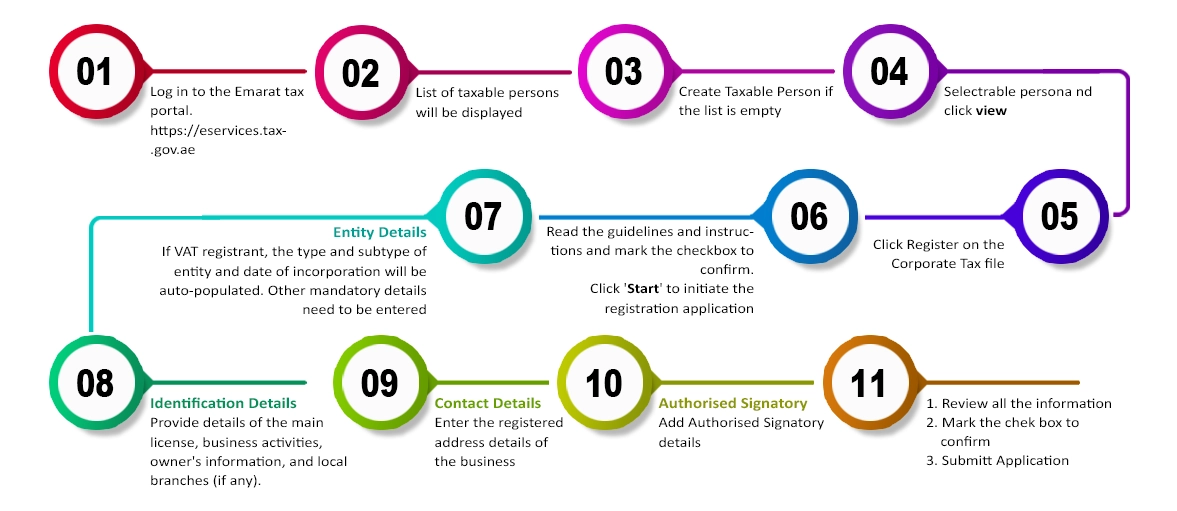
UAE Tax Timeline: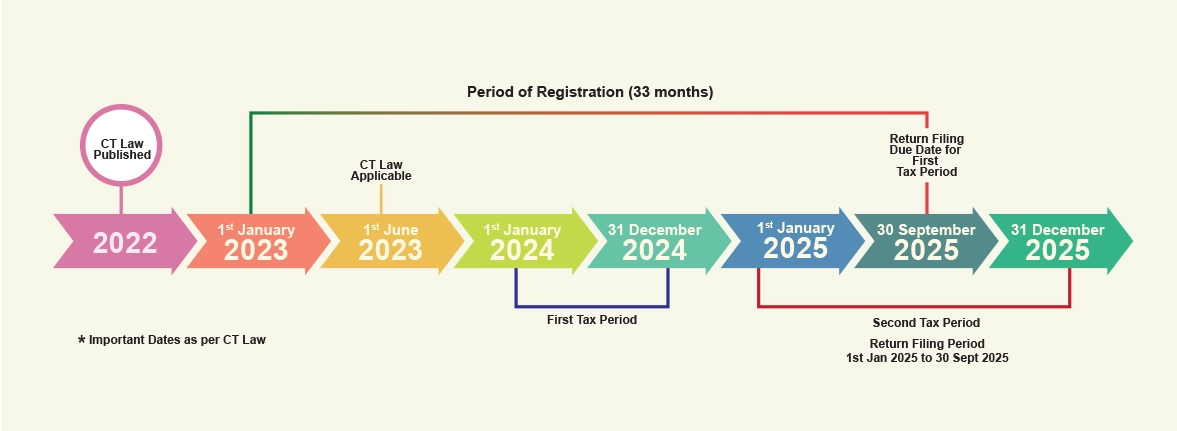
Tax Residency Certificate:
EmaraTax Platform Interface: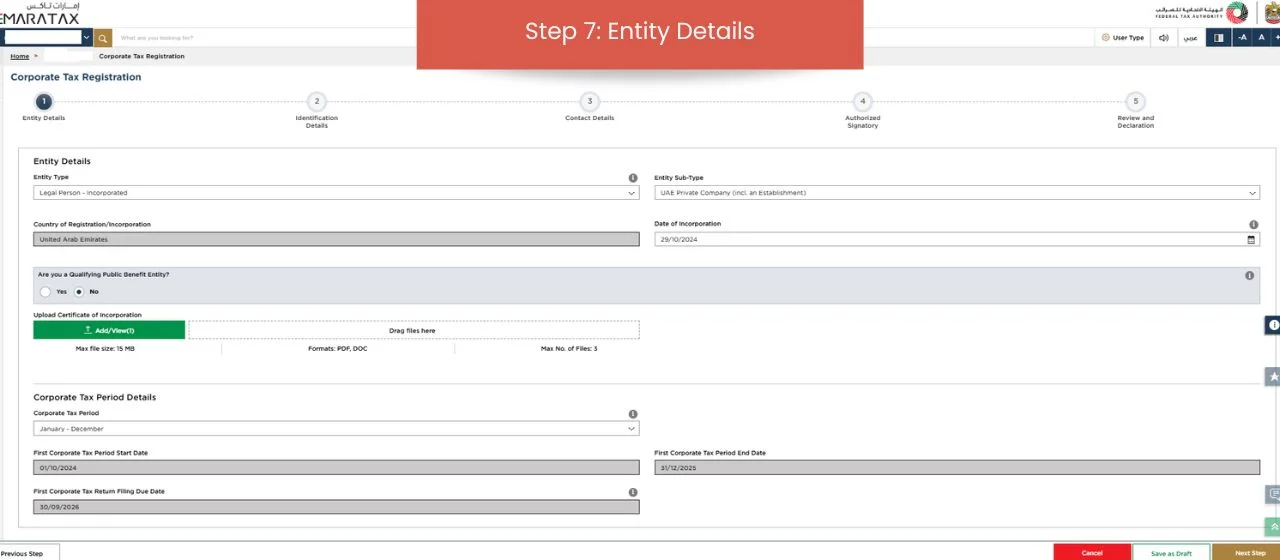
Key Compliance Obligations
- Maintain Proper Accounting Records – For minimum 7 years
- File Annual Tax Returns – Within 9 months of financial year-end
- Pay Tax Due – Same deadline as return filing
- Notify FTA of Changes – Address, activities, or legal structure changes
- Transfer Pricing Documentation – For related-party transactions
Penalties for Non-Compliance
| Violation | Penalty (AED) |
|---|---|
| Late registration | 10,000 |
| Late filing of return | 1,000 (first time), 2,000 (repeat) |
| Late payment | 2% immediate + 4% monthly thereafter |
| Incorrect returns | Up to 50% of tax shortfall |
Free Zone Considerations
Free Zone companies can still benefit from 0% Corporate Tax on “Qualifying Income” if they:
- Maintain adequate substance in the UAE
- Derive income from qualifying activities
- Meet arm’s length principle for transactions
- File proper compliance declarations
Important: The UAE tax landscape is evolving rapidly. Always consult with a registered tax agent or the Federal Tax Authority directly for the most current requirements specific to your business situation.
